On the South Bank. (1)
Posted: August 6, 2013 Filed under: Architectural, Artistic London, Monumental | Tags: london civic space, southbank skate park, The Southbank Centre Comments Off on On the South Bank. (1)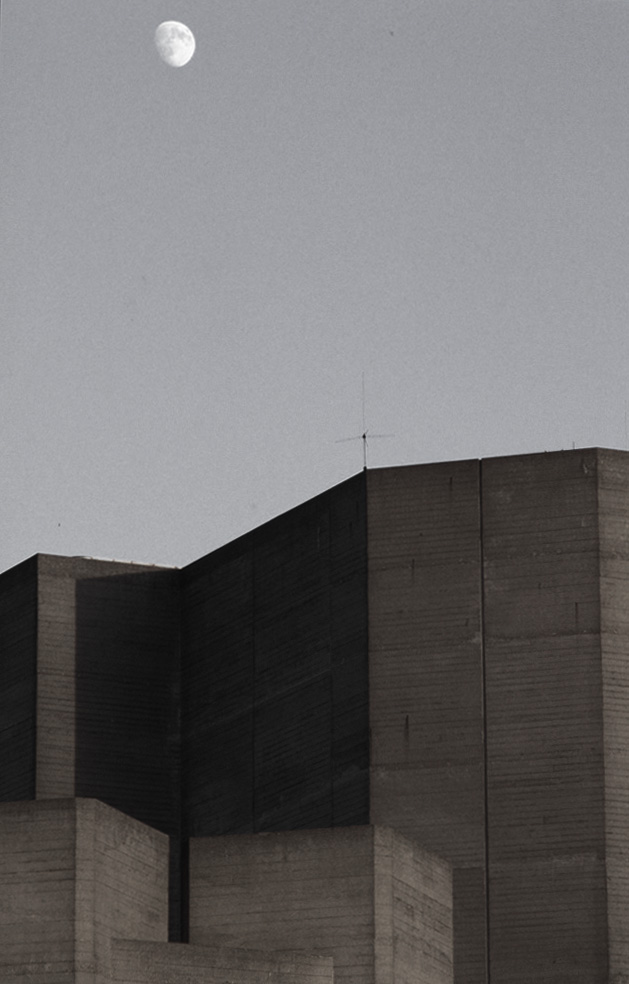
National Theatre. © David Secombe 2010.
Brutalist architecture has never been popular in Britain. The garden, the milk float, the net curtain, all work to alienate the British sensibility from the modernist, and especially the Brutalist, vision. We don’t care how pure its aesthetic is. We like things Nice.
Maybe the one exception is the good old South Bank. For some reason, despite decades of controversy, two murders, and several refits and remodellings, this complex of buildings is that genuine thing, beloved of the people. Unpromising as one may think it looks (though it is now dotted all over with bright structures, a giant yellow stairway, a turquoise Mexican place in shipping containers, pink things, green bits; they do certainly brighten it up). This is by accident as much as design. Maybe familiarity. Maybe proximity to Tate Modern. Maybe the development of Gabriel’s Wharf and that whole stretch of the river into something a little more friendly. Partly the skateboarders, who just seem to exist alongside everything else, whose thwack thwacks have followed us along that path by the river since the seventies. Certainly the restaurants: people always want something to eat, and the current proposed redevelopment is essentially an opportunity to expand on this.
At just that point, it stops being accident and becomes something more sinister. The space, rejuvenated as it is, has felt increasingly managed (that is, filled with things to be bought) for the past span of years. This is in keeping with a trend, as civic space becomes more and more tied to retail; we are forgetting how to occupy a city without buying, without being told what to look at. If this plan goes ahead, the stretch of river we love most will end up like the renovated Brunswick Centre, with added Thames.
But the Brunswick doesn’t incorporate two of Britain’s most important cultural venues – or the Thames. There is a debate that Londoners (particularly; but also the whole country) need to have about what kind of shared space this complex is supposed to be – who is it for? what is it for? what do we value about it? what do we want it to be like? And, if nothing else, we appear now to be beginning to have that debate (this link is the most informative article we’ve seen on the subject).
The South Bank is important on a personal level. Many of us – most of us, in London – have played out our lives with it as a backdrop. Much as it pains us to admit it, Richard Curtis got that much right; every new relationship seems to have a South Bank moment, and serendipity multiplies there. You meet people, you see things, you get some space to contemplate the sky, you feel the proximity of the physical river, suddenly London feels open and mysterious. But serendipity only happens if you’re left alone to find it. The existing Southbank Centre has more than enough cafés, about 2000% more than ten years ago, and we liked it even then. (Very fond memories of the unassuming old canteen, going back further.) It has been that rare thing: a public space where one can feel private.
These shop-heavy proposals – necessitated by the desperate need for funding to maintain ever-growing levels of activity – will transform the area into yet another crowdfuelled, corporatised zone (art needs people; corporations need crowds). They will gut the Festival Hall embankment in the way that the Royal Opera House extension (also paid for by shiny shops) eviscerated Russell Street. No one can argue that the Royal Opera extension didn’t effectively kill the life (as distinguished from the shopping and eating) of the eastern end of Covent Garden Piazza; and you only have to look at what has been done to Spitalfields and Borough markets in the past few years to be afraid for the South Bank.
Aside from which, everyone seems to have forgotten a principle that was voiced by the influential architect Cedric Price (who designed a radical overhaul for the South Bank in 1983, complete with giant ferris wheel). He said that cities and buildings should never be empty, but nor should they ever be full. For all the recently-added ‘lifestyle opportunities’, this stretch of embankment has been one of the few areas left in London that retains some of this balance; and it’s going.
This is a big thing to say, and it is the crux of the debate the nation needs to have about the South Bank. (And indeed London.) The Southbank Centre has apparently got all kinds of educational remits to fulfil, and outreach, and developing the audiences of tomorrow, and family-friendly holiday activities to lay on, and tourists to first attract and then cater for, and the developments are partly to enable all of this. They’re also, to create badly-needed space for existing facilities: the Poetry Library, for one. Billy Bragg wrote compellingly the other day about the needs of performers, and the projects he describes that are going on at the Southbank Centre are inspiring. Itislovely to go there and have a roof garden. Both of your correspondents here love the South Bank: we use the centre constantly and depend on it hugely. But none of that means the developments in their current form – new shops and restaurants, an obstructive building in the middle, an even more ruined skyline over the river, a giant glass box squatting on top of everything, put through at speed and not consulted on – look like improvements to the actual city. (Sir Nicholas Hytner may have a point.) It’s time to stop, take a breath, have the conversation. This has been as good as said by architects who could have pitched for the contract, but didn’t. As the Architect’s Journal reported:
Bennetts Associates had already withdrawn from the competition, claiming that it had too much work and that it had ‘reservations about the brief’ (see AJ 20.09.2012). Rowan Moore, writing in the Observer, also raised concerns about the ‘commercially-led’ plans which he said could ‘make the Southbank Centre resemble Terminal 5 or Canary Wharf or any moderately upmarket shopping mall.’
After the Tories won the 1951 election, they prioritised the destruction of the Festival of Britain site, for ideological reasons. The current government’s attitudes both to the arts and to public space, similarly ideological, have put institutions large and small under pressure to prove they have a right to exist (you earn the right by making money). The current proposed Southbank scheme is thus about to act out the contemporary version of this philistinism, and the fact that it is presented in the language of ‘inclusivity’ makes it more chilling.
This idea of inclusivity is being underpinned by branding, some of it quite subtle, and the brand seems increasingly personality-driven. Artistic Director Jude Kelly is the driver of these developments, and indeed of the whole ongoing ‘revitalisation’ of the centre. She has made herself admirably available to defend the proposals, and her vision, but the danger is that the whole vision for the South Bank feels like a personal vision. If one wants an ice cream in the interval at the Festival Hall, one even buys a ‘Jude’s Ice Cream’! (The franchise is Minghella.) ‘Southbank Centre’, having already joined up the words South and Bank, has now dropped ‘The’ from its name – turning it from a place into a brand – Southbank Centre – rather as if it were a restaurant or shop. It begins to feel like a sort of Boden or Orla Kiely cultural space, where middle class people (because we are all middle class now) are safe to consume culture en masse along with our pizzas, noodles, and extra-large caramel lattes. But where’s the space for the genuine, austere surprise ? The one no one could plan for you?
We know times have changed – we certainly do know it – but if this blog post is anything, it’s a plea for a deep breath and a deep look at what things really mean. And we’ve barely even mentioned the skateboarders.
We’ll be posting the rest of the week with pictures and impressions – poems, not polemics – of the South Bank and the people who use it.
© Katy Evans-Bush
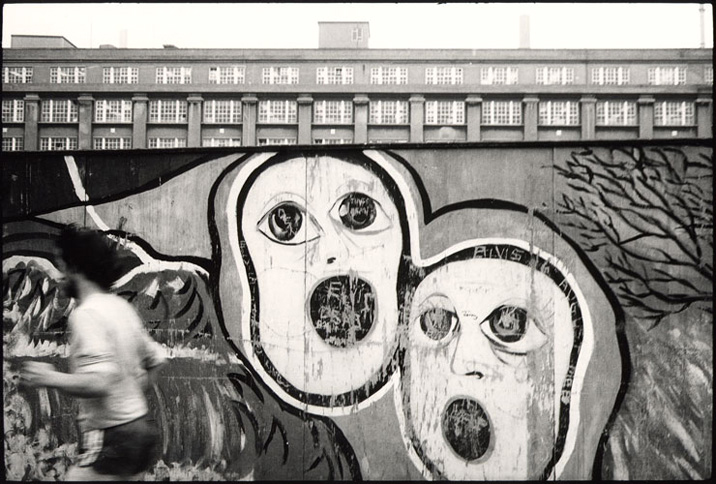
Hoarding opposite National Theatre. © David Secombe 1982.
End of Term.
Posted: July 25, 2013 Filed under: Graffiti, London Music, Out Of Town | Tags: Buzzcocks, Elton John is a Punk, Larry Parnes, Malcolm McLaren, New Musical Express, Sex Pistols, Sham 69, Strummerville, The Clash Comments Off on End of Term.
© David Secombe.
David Secombe:
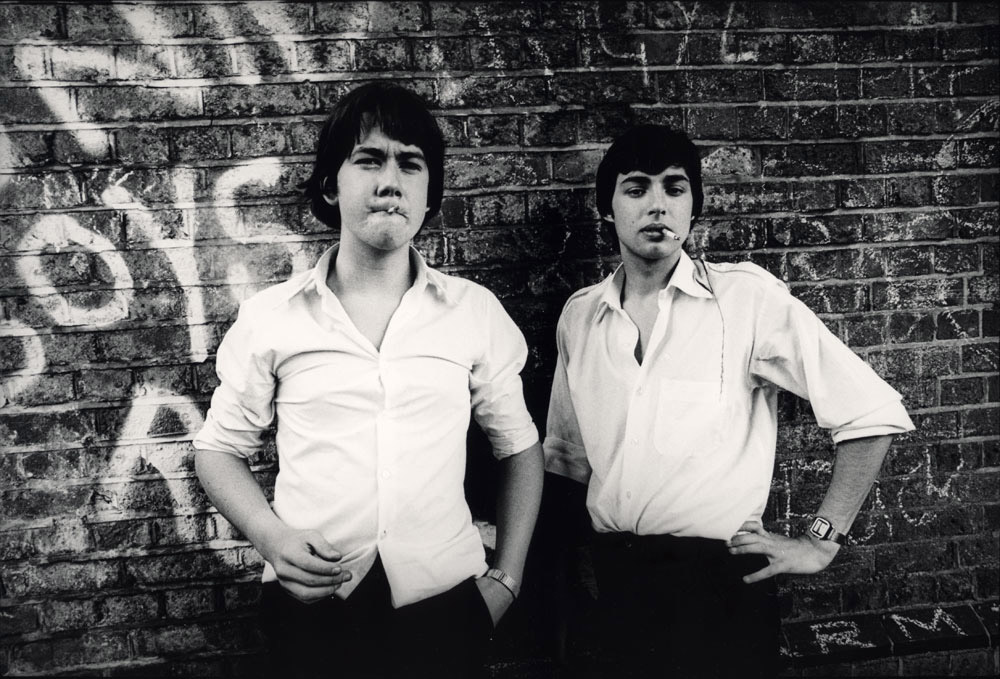
July, 1978. I am 16. I am serving out my final days as a pupil at a comically inadequate private school in Surrey’s lush commuter belt. I am bailing out before ‘A’ levels because it has not been a happy three years and I am taking the earliest opportunity to escape. To mark the end of my final term I take my camera to school. There are some interesting things to photograph.
The shrine in the locker above (it wasn’t my locker) consists of pictures cut from the pages of the sacred music title of the day, New Musical Express. The photos of the Sex Pistols, The Clash, the young Bob Geldof, Ian Dury and company were most probably the work of NME stalwarts Pennie Smith, Chalkie Davies and Kevin Cummins, and would have accompanied articles by the likes of Julie Burchill, Tony Parsons, Charles Sharr Murray, Nick Kent, etc.. By the summer of 1978, Punk was mainstream enough to be embraced by all but the most fastidious privately-educated schoolboy, even if the irony of its acceptance by future mid-management executives was lost upon the lads themselves. (Although it is worth mentioning that the much-worshipped Joe Strummer had been a pupil at a neighbouring private school a few years earlier, where he became a friend of my brother. Joe – or John – swapped his camera for my brother’s drum kit, and later credited this exchange as furnishing him with his first musical instrument. Since I first got into photography by using my brother’s camera, you could say that Joe Strummer’s Minolta got me into photography – except that he also said that his first instrument was a ukelele.)
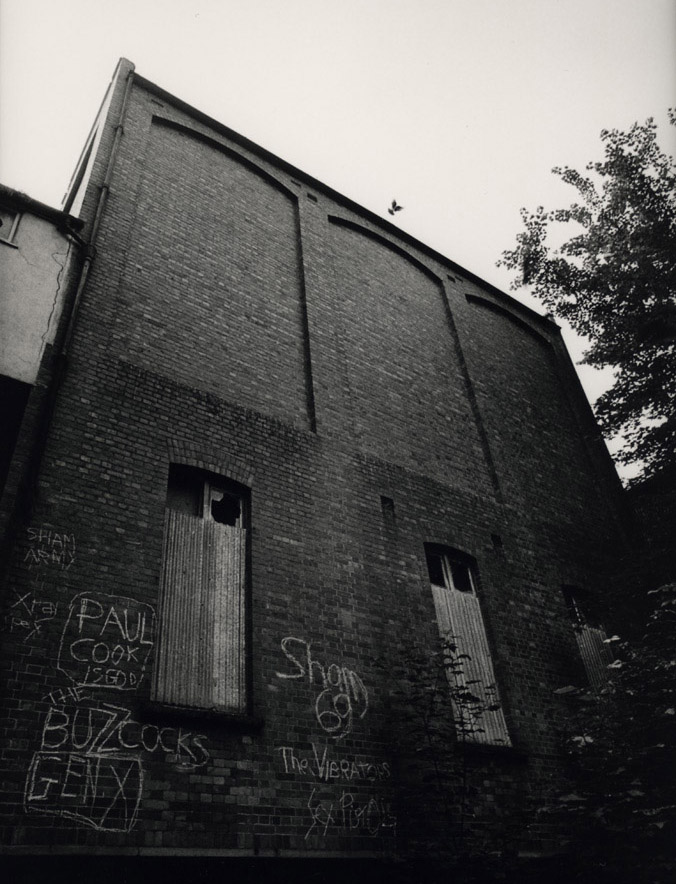
© David Secombe.
The atmosphere of those distant, final days was a strange admixture of gleeful anarchy and leafy English pastoral; exams done, the highlight of each afternoon was the illicit visit to an abandoned theatre, a crumbling, doomed edifice in a lush wooded hollow. This imposing structure offered wall area large enough to proclaim as loudly as one was able the primacy of favourite bands, whilst the surrounding greenery furnished a sylvan setting for ritualised smoking sessions.

© David Secombe, 1978.
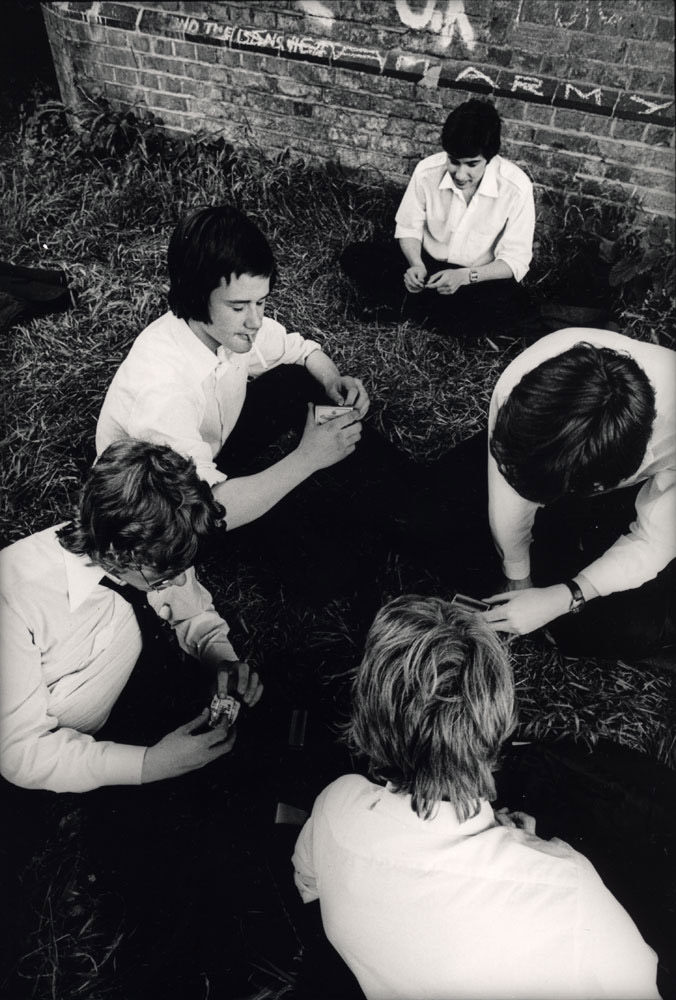
© David Secombe, 1978.
The following year, the theatre and the grubby enchantment of its grotto was cleared and a monumental circulatory system took its place, thus wrecking a perfectly inoffensive little suburban town. Years later, when the thunderous circle of the M25 imprinted itself upon the green hinterland of the capital, the course of the motorway took it within a few yards of the school, destroying at least one of its favoured – and, by some of us, much-hated – routes for cross-country runs. Still later, the school was hit by a scandal attached to one of its teaching faculty (not present in my time), which made the national press and prised skeletons loose from various closets. I was able to revisit a decade or so ago, after suggesting to a director friend that it would make a good location for an episode of a TV detective series he was filming. I visited the unit on location; and it seemed to my 40-year old self that the entire school had been demolished and replaced with an 8:10 scale replica.
The late 1970s have become subsumed into the nostalgia business, and there is something absurd and not a little nauseating about the era being trumpeted as some kind of lost eden.But the youth we are given is the only one we have; as some Facebook wag said recently, Punk was for my generation what World War 2 was for our fathers’. (And what did we get afterwards? The New Romantics. That has always struck me as an indication of cultural failure.) I felt largely out of sync with my time then and, predictably enough, have felt largely out of sync with it ever since. In any case, these 35-year old photos strike me as being better than they have any right to be, and almost persuade me that I knew what I was doing when I took them. This is what our memories should look like: a flattering improvement on reality – and they are dedicated to anyone finishing school this month. Someone like my daughter, in fact.
© David Secombe 1978.
… for The London Column.
Don’t Put Your Daughter On The Stage
Posted: July 19, 2013 Filed under: Theatrical London | Tags: Annie, Apollo Victoria, Don't Put your daughter on the stage, Noel Coward 1 Comment
Audition line; open casting call for Annie, Apollo Theatre, Victoria. Photo © David Secombe, 1980.
From Noel Coward On The Air, 1947:
Some years ago when I was returning from the Far East on a very large ship, I was pursued around the decks every day by a very large lady. She showed me some photographs of her daughter, a repellent-looking girl, and seemed convinced that she was destined for a great stage career. Finally, in sheer self-preservation, I locked myself in my cabin and wrote this song:
Don’t Put Your Daughter On The Stage, Mrs. Worthington.
Don’t put your daughter on the stage, Mrs. Worthington
Don’t put your daughter on the stage
The profession is overcrowded
The struggle’s pretty tough
And admitting the fact she’s burning to act
That isn’t quite enough
She’s a nice girl and though her teeth are fairly good
She’s not the type I ever would be eager to engage I repeat,
Mrs. Worthington, sweet Mrs. Worthington
Don’t put your daughter on the stage
[ … etc. The rest of the lyrics may be found here.]
Arthur Machen’s Hill of Dreams.
Posted: July 4, 2013 Filed under: Architectural, Bohemian London, Fictional London, Literary London | Tags: Arthur Machen, Battersea, Hill of Dreams, pipe smoker Comments Off on Arthur Machen’s Hill of Dreams.
Tennyson Street, Battersea. Photo © David Secombe 1982.
From Hill of Dreams, Arthur Machen, 1907:
It was not till the winter was well advanced that he began at all to explore the region in which he lived. Soon after his arrival in the grey street he had taken one or two vague walks, hardly noticing where he went or what he saw; but for all the summer he had shut himself in his room, beholding nothing but the form and colour of words. [. . .]
Now, however, when the new year was beginning its dull days, he began to diverge occasionally to right and left, sometimes eating his luncheon in odd corners, in the bulging parlours of eighteenth-century taverns, that still fronted the surging sea of modern streets, or perhaps in brand new “publics” on the broken borders of the brickfields, smelling of the clay from which they had swollen. He found waste by-places behind railway embankments where he could smoke his pipe sheltered from the wind; sometimes there was a wooden fence by an old pear-orchard where he sat and gazed at the wet desolation of the market-gardens, munching a few currant biscuits by way of dinner. As he went farther afield a sense of immensity slowly grew upon him; it was as if, from the little island of his room, that one friendly place, he pushed out into the grey unknown, into a city that for him was uninhabited as the desert.
At 11.30 a.m. (UK) today, Thursday 4 July, Radio 4 is broadcasting a documentary about Arthur Machen and his ‘disturbing’ visions of a world beyond our own.


 The London Column