Marketa Luskacova’s street music.
Posted: February 1, 2017 Filed under: London Labour, London Music, London Types, Pavements, Performers | Tags: Henry Mayhew, Jesus Blood Never Failed Me Yet, London in the 1970s, London street markets, Marketa Luskacova 1 Comment Portobello Rd., 1978.
From London Labour and the London Poor by Henry Mayhew, 1851: Concerning street musicians, they are of multifarious classes. As a general rule, they may almost be divided into the tolerable and the intolerable performers, some of them trusting to their skill in music for the reward for their exertions, others only making a noise, so that whatever money they obtain is given to them merely as an inducement for them to depart.
We’ve had the pleasure of showing Marketa’s photographs of London on these pages before, and the pictures on here today are from her new book To Remember — London Street Musicians 1975–1990. This volume draws on Marketa’s intimacy with east and west London, as almost all the images are from the street markets around Brick Lane or those of the Portobello Rd..
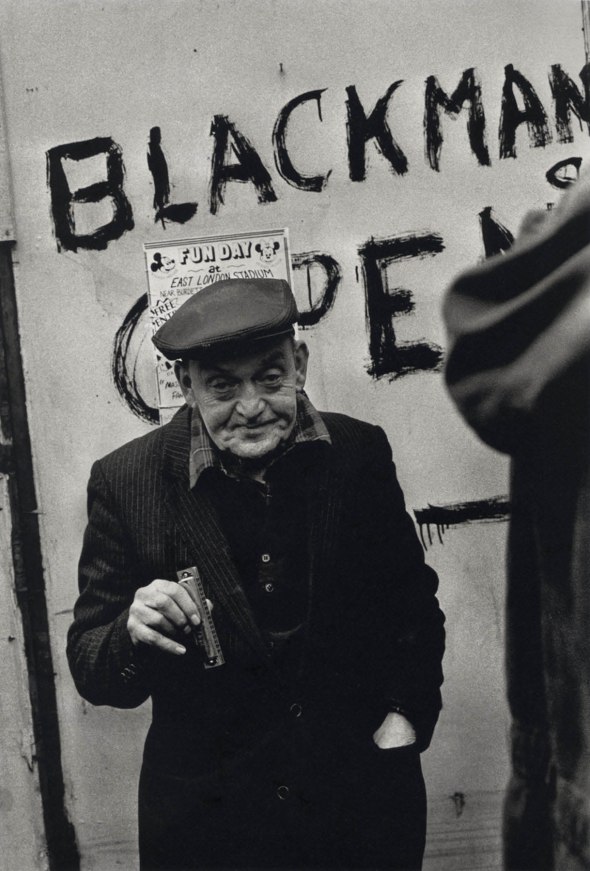 Cheshire St., 1978.
Marketa is photographic royalty, a point emphasized by a couple of contributions to the new collection by two of her admirers. Shortly before he died, John Berger wrote the book’s foreword; and, opposite the dedication page, is a 1978 photo of Marketa and her young son Matthew travelling on a bus, an image by Henri Cartier-Bresson.
 Cheshire St., 1982.
The world Marketa documented has to a large extent disappeared; apart from anything else, both east and west London have been transformed by gentrification and ‘social cleansing’. Some of the street performers in her pictures look as if they might be illustrations out of Mayhew’s 1850 accounts of London street types; these photographs have a timeless quality. Ironically, the pictures that seem slightly tied to period are the ones of younger, ‘alternative’ street performers, a phenomenon indelibly associated with the 1970s and 1980s.
 Covent Garden, 1978.
As I’ve said before, Marketa has an amazing gift for empathy and an ability to get inside a situation without imposing her presence on it. It is clear that she knew many of these performers very well; and if you look carefully, you can see the infant Matthew in a couple of the pictures, his presence a reminder that Marketa had to keep her eye on him as well as the musicians she was photographing. This is photography as a way of life, as a way of being. She was meeting the street performers on an equal footing; she was as much a part of their landscape as they were of hers.
 Portobello Rd., 1975.
You don’t need me to tell you how moving these photographs are. In the previous entry we devoted to Marketa I wrote about her astonishing picture of a man singing in the street, which for me is one of the greatest photographs of a performer made by anyone anywhere. A few of the street musicians in her photos have clearly lost hope; but it is the images of those giving their all that are the most poignant. I have no idea whether ‘Caruso’ in the image at the top of this page was a good turn or not – but on the basis of this picture I am prepared to give him the benefit of the doubt. If anyone was ever prepared to ‘fail better’ it had to be him. (I am also, inevitably, reminded of this famous recording which has at its heart the song of a homeless man on a London street.)
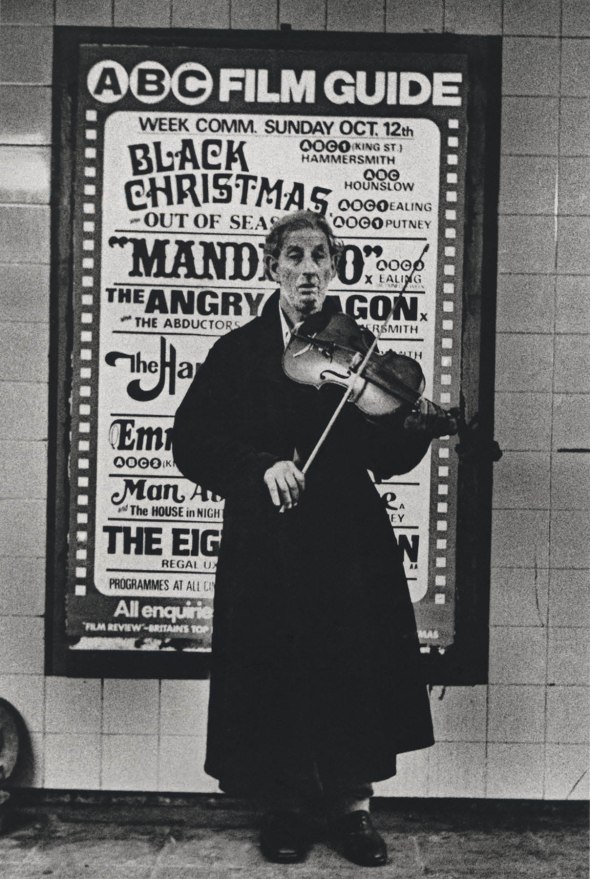 Notting Hill Gate Underground, 1975.
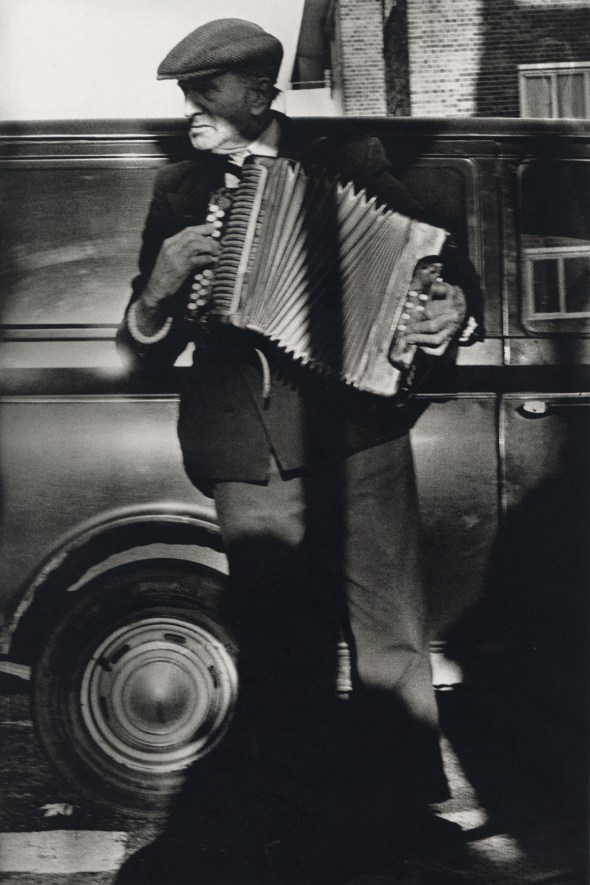 Bacon St., 1977.
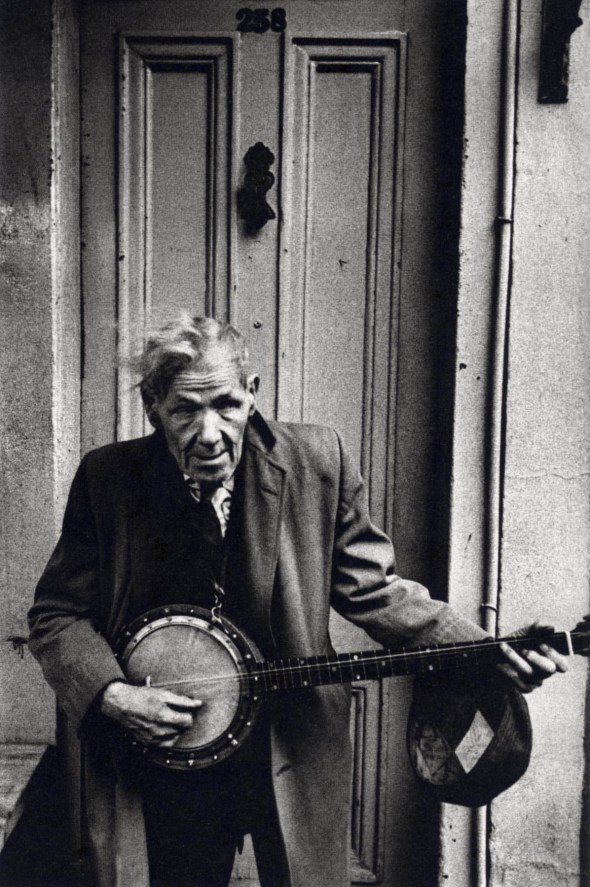 Portobello Rd., 1977.
You can buy Marketa’s book at a few good bookshops (Whitechapel Gallery Bookshop, The Photographers’ Gallery, Camden Arts Centre, London Review of Books, Koenig Books Charing Cross Rd., Pages of Hackney, Donlon Books, Burley Fisher Books, Book and Kitchen, De La Warr Pavilion Bexhill-on-Sea) … or direct from Marketa herself.
All photos © Marketa Luskacova.
To launch To Remember, Marketa will be discussing her work with Andrew Dempsey on Monday 13 February at Leila’s Shop, 15–17 Calvert Avenue, London E2 7JP. From 6.30 pm.. To reserve a seat (recommended) email info@leilasshop.com.
See also: The Lost London of Marketa Luskacova, The London Nobody Knows (revisited).
Wild Camden.
Posted: January 6, 2017 Filed under: Amusements, Artistic London, Bohemian London, Events, Interiors, Public Announcements, Wildlife | Tags: Almuth Tebbenhof, Andrzej Maria Borkowski, Camden art, Christopher Reid, Danuta Sołowiej, Heather Barnett, Jens Schaumann, Julia Schrader, Katy Evans-Bush, London art galleries, Marzena Pogorzały, Natalia Zagórska-Thomas, Roisin Tierney, Studio Ex Purgamento 1 Comment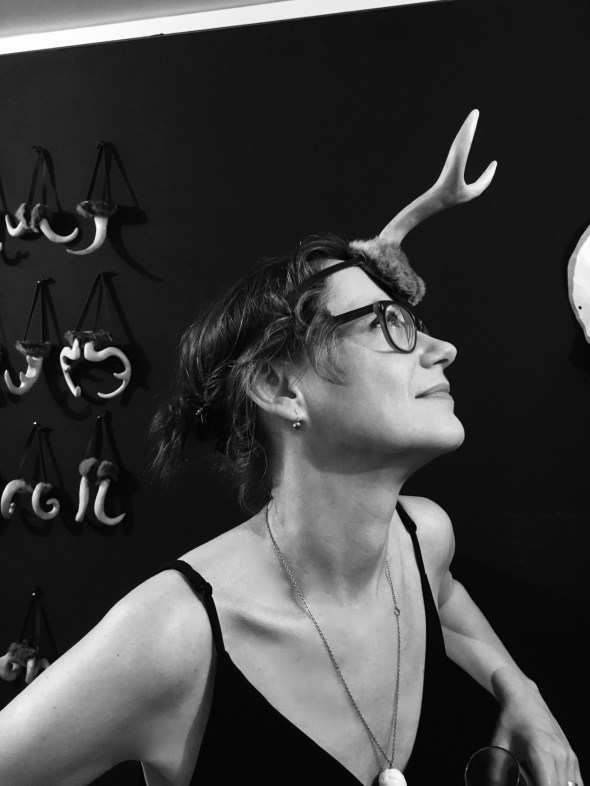
Natalia Zagórska-Thomas wearing Julia Schrader. Photo © Jens Schaumann.
DS: Well, we managed to negotiate our way out of 2016 only to find 2017 looming before us like a rogue ice shelf. Yet although the festive season was full of foreboding there were occasional moments of optimism amidst the gloom; one of the most enjoyable events in my pre-Christmas calendar was the private view of Call of the Wild at Studio Ex Purgamento in Camden.

Antlers © Julia Schrader.
Visitors to the gallery are often wrong-footed by the address; it is located in a second-floor extension in a private home, a flat that belongs to artist and conservator Natalia Zagórska-Thomas and her husband Simon. If there was ever an enterprise that demonstrated devotion to an ideal of what art can and should be, Studio Ex Purgamento is it.

Going into the Thing Seriously; or These Influences Have Been Exerted for Good. © Natalia Zagórska-Thomas (alternative titles provided for the artist by Diane Williams).
Profit, apart from a tiny percentage above a certain price to try to recover some costs, goes to artists directly. Some years we sell a lot; others, not at all. I want to show established names alongside lesser known artists whose work interests me, and to mix visual art forms with text, design, performance, architecture, design, music and science. I show many Polish artists to promote their profile and contribution to the culture of the city.
As to the current show, Natalia describes it thus: This is not a tidy show. This is not a tidy subject. What I wanted is what I think I always want: a contemporary version of the cabinet of curiosities, a camera obscura, an idiosyncratic collection of specimens picked up along the way. It feels like life: messy, chaotic, undisciplined, joyous, violent and confusing.

Pale Blue Hexapod © Danuta Sołowiej.
Somehow, Natalia has managed to fit work by 25 artists into her small gallery; these include sculptures by Almuth Tebbenhof, Danuta Sołowiej, and Andrzej Maria Borkowski, wearable art by Julia Schrader, photographs by Jens Schaumann, Marzena Pogorzały (whose images of massive Antarctic ice sheets are elegant visual tokens of the strangled metaphor I opened with) and your own correspondent. The show also features an extraordinary ‘biological’ installation by Heather Barnett, and poems by such luminaries (and friends of The London Column) as Roisin Tierney, Christopher Reid and Katy Evans Bush.
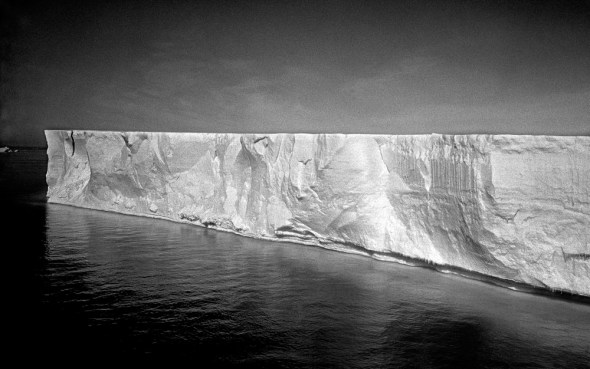
Ice 3. © Marzena Pogorzaly.
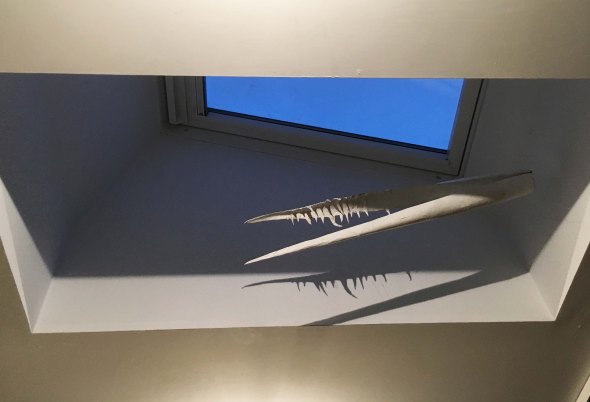
© Andrzej Maria Borkowski.
You hardly need me to tell you that the London art scene is full of bullshit, any more than you need me to tell you that 2017 could be a rough year. We will need all the optimism we can get our hands on; and any blows against philistinism or the dead weight of cultural conformity are as welcome as they are necessary. As Katy Evans-Bush writes in Call of the Wild‘s exhibition catalogue: ‘At the time of going to print no one knows what’s going to happen next. Old ways of being uncivilised are being exhumed and new ones invented. The one thing we do know is that we will need to call on all our most civilised impulses – as well as our deepest, wildest aardvark’. Or, to put it another way, if you think the world is going to end tomorrow, plant a tree today. (Who said that? Answers on a postcard to …)

Ruan Minor, Cornwall, 1978. © David Secombe.
Gallery photos by Natalia.
Call of the Wild runs at Studio Ex Purgamento until 15 January; open weekends from 11 am — 6 pm. To visit during the week, call for an appointment. (132D Camden Street, London NW1 0HY; 07799 495549; info@studioexpurgamento.com. http://www.studioexpurgamento.com.)
Winter Solstice – or The Ghost of Christmas Future.
Posted: December 23, 2016 Filed under: Anniversaries, Ceremonial, Parks, Transport | Tags: Decline of the Roman Empire, greenwich park, Roman Britain 2 Comments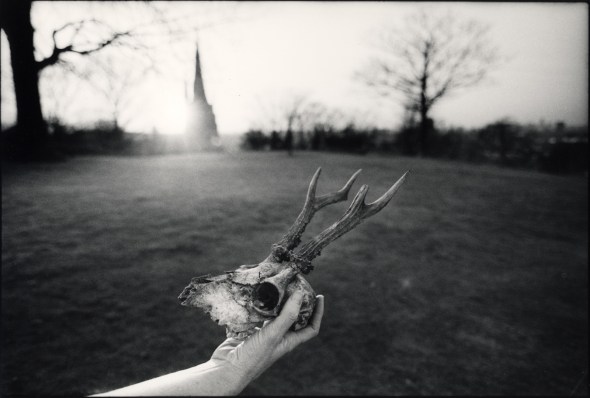 Greenwich Park, 1993. © David Secombe.
This Christmas season has a peculiar flavour, distinct from any other I can recall. The sheer weirdness of world events has imbued it with a sense of foreboding; and although I am old enough to remember the tail end of the Cold War and the fear of Mutual Assured Destruction, what we are living through now seems uniquely tawdry and surreal. Everyone seems to be casting around for historical parallels to contextualize the strangeness of the present. Thought For The Day pieties don’t really belong on The London Column, so I won’t rehearse the obvious. But, given that so many are casting around for runes to foretell the future, we might as well invoke the pagan underpinnings of the festival that is now upon us.
The picture above was taken in Greenwich Park in December 1993; the roe deer skull in the photo belonged to my companion on the day, an art teacher who was taking it into her class as a subject for a still life. It was she who remembered that we were standing near the remains of a Romano-Celtic temple, and she produced the skull as an fittingly atavistic prop. In its day, the temple in Greenwich Park was an excellently situated facility; an ancient world insurance bureau, handy for any last-minute sacrifices you wanted to make to Poseidon (or whoever) on your way to the Kent coast. And by 400 AD there might have been a lot of anxious sacrificial blood-letting at this temple, what with all those hairy Saxons and Picts … The retreat of the Romans from Britain has always struck me as being as comic as it is poignant; I’m thinking of the Romanised Brits, all those comfortable farmers and aspirational merchants, watching in dismay as the props of civilization gradually disappeared. No wonder so much treasure got cached at this time, buried for safekeeping and then forgotten. I imagine a party of bewildered civilians standing on the beach at, say, Richborough, waving off the last Roman galley, saying that the lads wouldn’t be gone long and that normal service would soon be resumed. I wonder how long it took for the reality to sink in.
And on that note …
Happy Christmas everyone.
West End World.
Posted: November 24, 2016 Filed under: Architectural, Housing, Tall Tales, Vanishings | Tags: Georgian London, John Nash, John Summerson, Park Crescent 1 Comment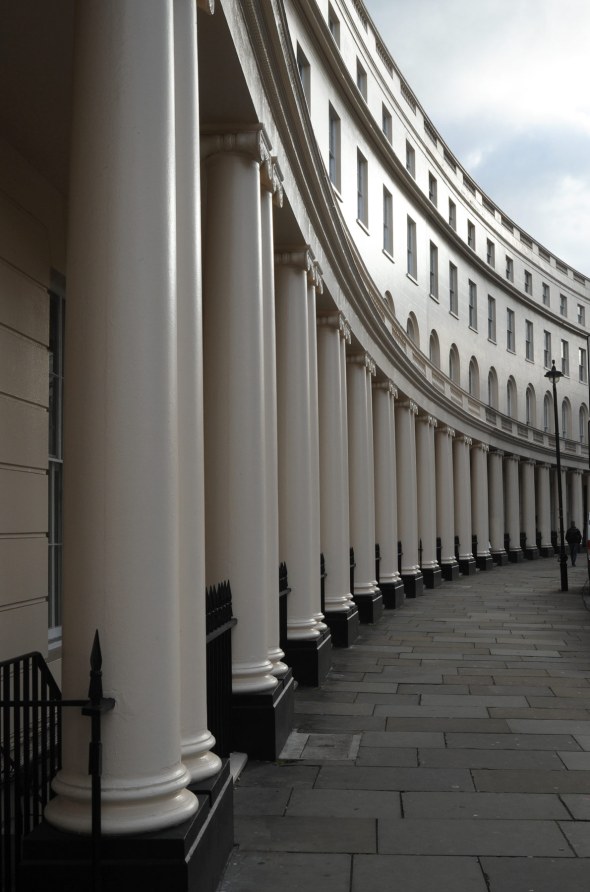
Park Crescent east, November 2016.
From Georgian London, John Summerson:
The earliest architectural feature of Regent’s Park is the very lovely, unpretentious, neatly detailed Park Crescent (1812). It opens out at either end to the New Road (Marylebone Road of today) and is continued northwards by Park Square (1823-5). The design of the Square is less happy, the facades being crowded and coarse in design, but the arrangement as a whole, considered as a formal approach from a thoroughfare to a landscaped park, is admirable, and the simple appropriateness of Park Crescent with its Ionic colonnades is beyond criticism.
It’s not every day that you see a Nash Terrace being destroyed. As of November 2016, this is what the west side of Park Crescent looks like:

As a footnote to the entry above, Summerson adds: ‘In recent years the whole of Park Crescent has been rebuilt, the new facades, however, being scrupulous copies of the old.’ He was writing in the 1960s; Park Crescent had been damaged by bombing in the war and the facades cleared and replaced in the 1950s. So in fact, the familiar Regency terrace was never, in my my lifetime, anything more than a simulacrum.
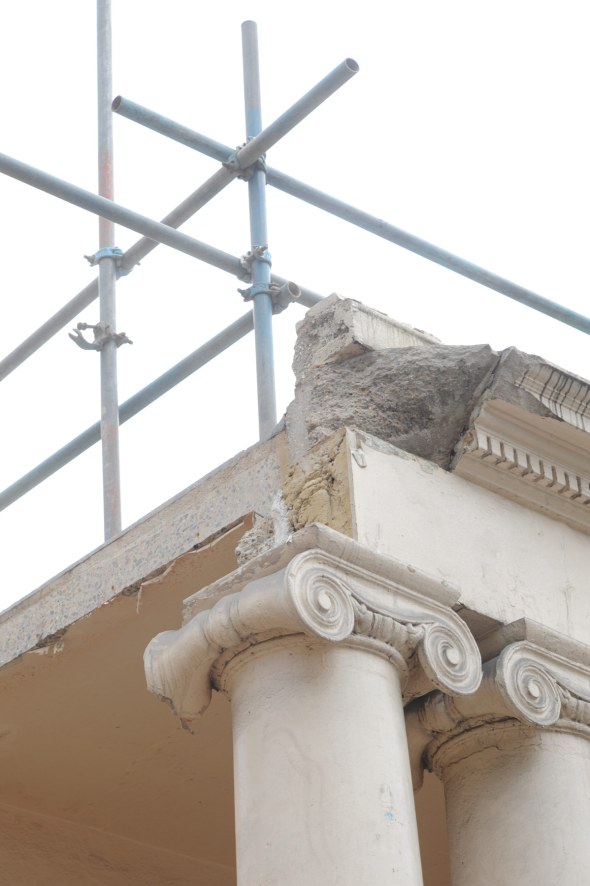
An architect friend notes that the firm carrying out the work have good credentials for restoring historic buildings and, in any case, Nash’s first priority was always the scenic exterior. Summerson sums up Nash’s Regent’s Park terraces with this chilly flourish: ‘Where the eye apprehends a mansion of great distinction, supported by lesser mansions and service quarters, the mind must interpret it as a block of thin houses carrying less ornament or none at all. The sham is flagrant and absurd. The terraces are architectural whims; and though Nash was serious enough in his intention, the effect is an odd combination of magnificence and bathos …‘
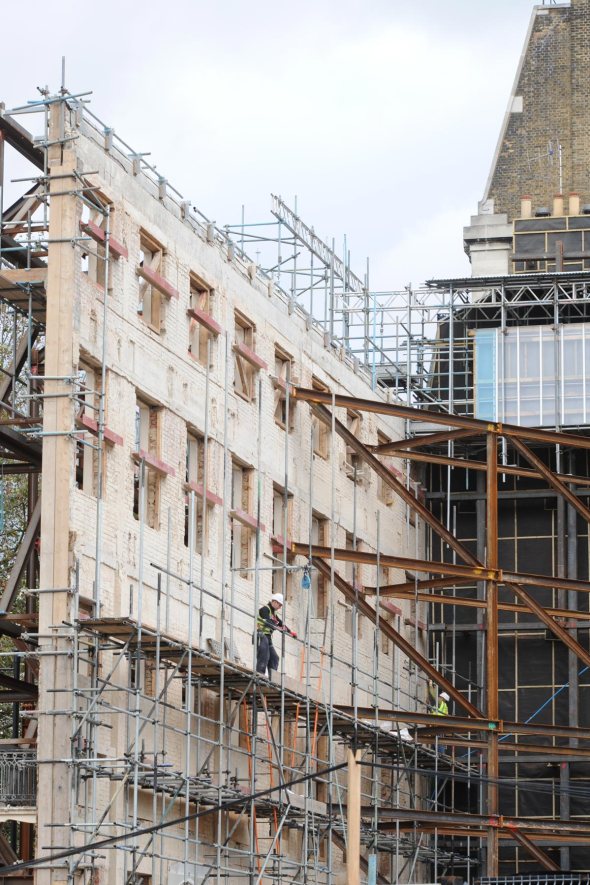
So it was conceived as a fake and was remade as a different kind of fake in the post-war era. This knowledge should make me feel better, but somehow it doesn’t. The reason the site is being developed, inevitably, is to provide luxury homes for the super-rich; and, should you be super-rich, you can watch a video of the development here and browse one of the flats for sale (for £5.5M) here. The blurb for the 3 bedroom apartment mentions an ‘indulgent’ master bedroom, and a photo of the en suite shows a television installed in a cabinet above the bath (handy for keeping tabs on financial markets via Bloomberg or catching the latest edition of Supermarket Sweep). The illustrative interiors in the sales material as are tasteful and antiseptic as any expensive hotel suite anywhere in the world, which is the default mode for such developments. These are dwellings fit for any self-respecting Master of the Universe or dictator in exile, although any resting despots would undoubtedly want to tart up their London pied-a-terre more than just a bit.
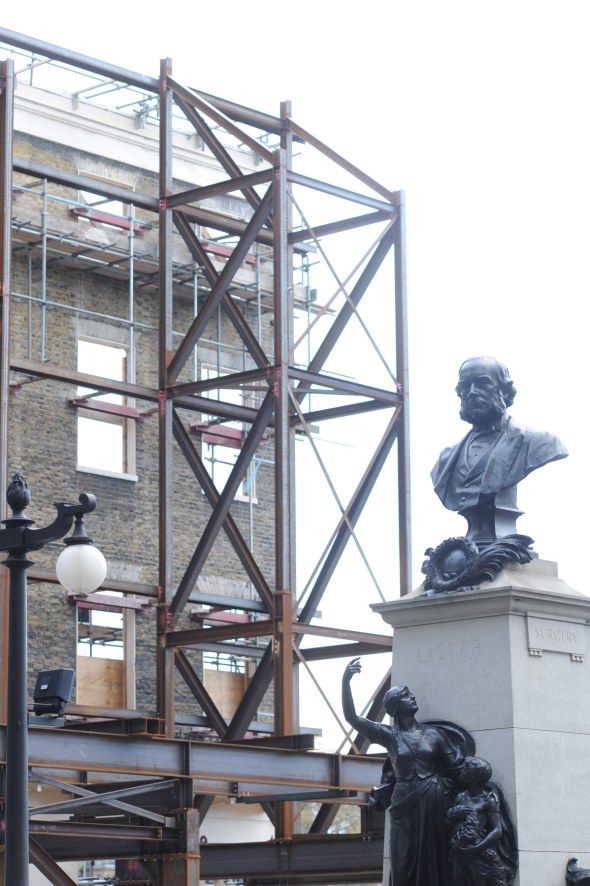
We have banged on before about the aggregate of unease that, post-Boris, post-Cameron, London is being transformed into a theme park replica of itself: a city made over for the (very) well-heeled to live and shop in, a sanitized urban consumption zone. It isn’t just a town planning issue or a conservation issue, it’s a usage issue. Summerson’s disdain aside, there was something strangely comforting in the knowledge that behind Nash’s sweeping facades were ramshackle structures consistent with the building philosophy of Georgian London (or, for that matter, the post-war era). The sheer opulence of the new quarters behind Park Crescent makes one choke; it is just another case of planning consent granted to nurture the sensibilities of the platinum Lamborghini set. Who is this brave new city for?
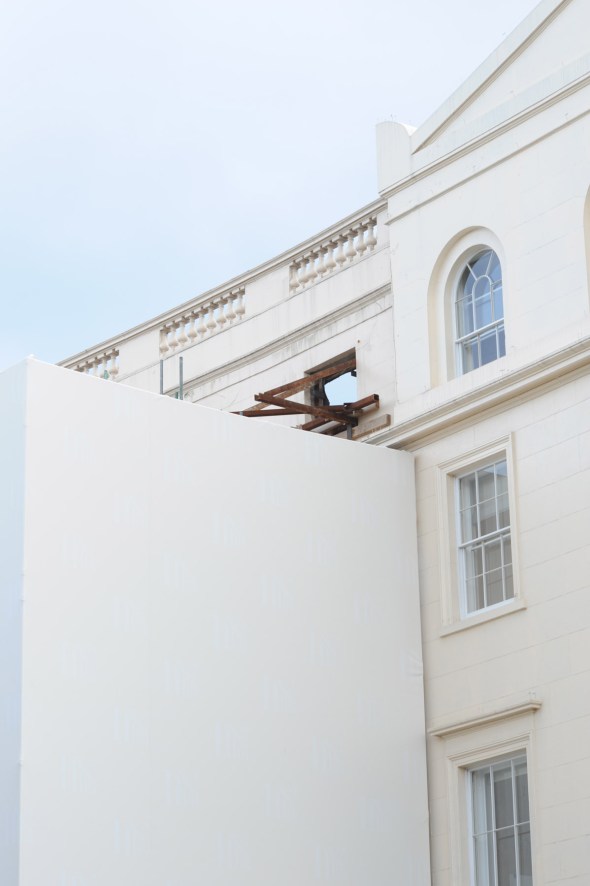
Work has already started on the evisceration of Park Crescent east … the Amazon Property hoarding has appeared near the junction with Portland Place – and outside no. 7 we noticed the poignant notice below …

All photos © David Secombe 2016.


 The London Column