Estates of Mind.
Posted: April 20, 2015 Filed under: Architectural, Class, Hospitals, The Thames, Vanishings | Tags: Isle of Dogs, Michael Mulcahy, Mike Seaborne, Samuda Estate, St John's Estate, Tarling Estate, Transition Group 3 Comments Tarling Estate, 2002. © Mike Seaborne.
Tarling Estate, Shadwell:
Located immediately to the east of Watney Street Market, Shadwell, the Tarling Estate was built c. 1950 to replace overcrowded slums and reduce the population density by half.
The run-down estate was demolished in 2003 and replaced by a higher density mixed-use development intended to both regenerate the area and create what the developer, Toynbee Housing Association, described as ‘a more mixed and balanced community’.
 Tarling Estate 2015. © Mike Seaborne.
Samuda Estate, Isle of Dogs:
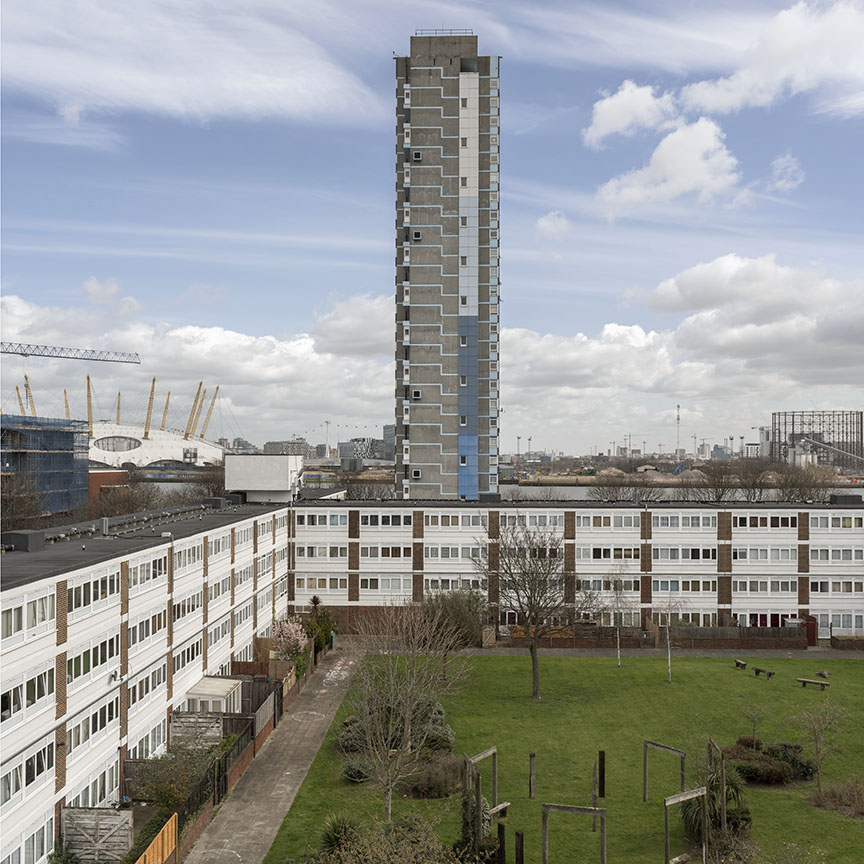 Samuda Estate 2015. © Mike Seaborne.
The Samuda Estate, completed by the Greater London Council in 1967, is mainly comprised of four and six story blocks arranged around a traffic-free square. There is also a 25-storey tower block of maisonettes – Kelson House – situated on a prime site by the river. The estate is in need of refurbishment and some residents believe that the estate’s owner, One Housing Group, are deliberately running it down so it can be demolished to make way for private housing.
St John’s Estate, Isle of Dogs:
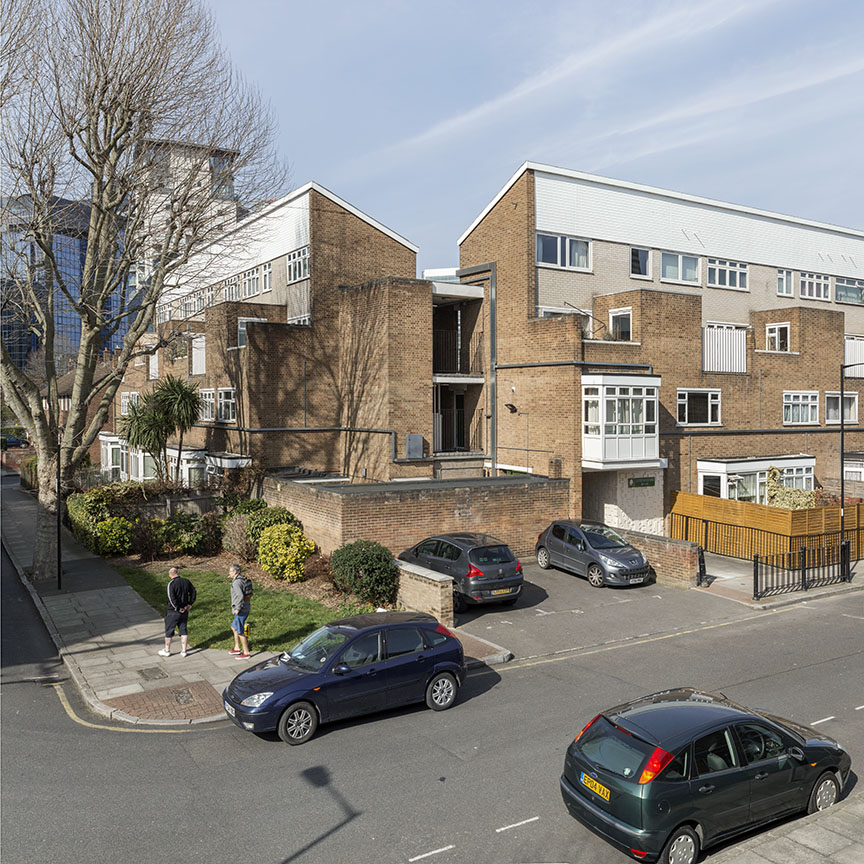 St John’s Estate 2015. © Mike Seaborne.
Planned in 1952 by Poplar Borough Council and described by John Betjeman as ‘one of the best post-war housing estates I have seen’, St John’s Estate was intended as a new self-contained neighbourhood along the lines of the award-winning Lansbury Estate in Poplar. In this it has largely succeeded but One Housing Group, owner of this and three other estates on the island, are considering the possibility of demolition and replacement by new high-density housing which might include several tower blocks of 50+ storeys.
Kingsbridge Estate, Isle of Dogs:
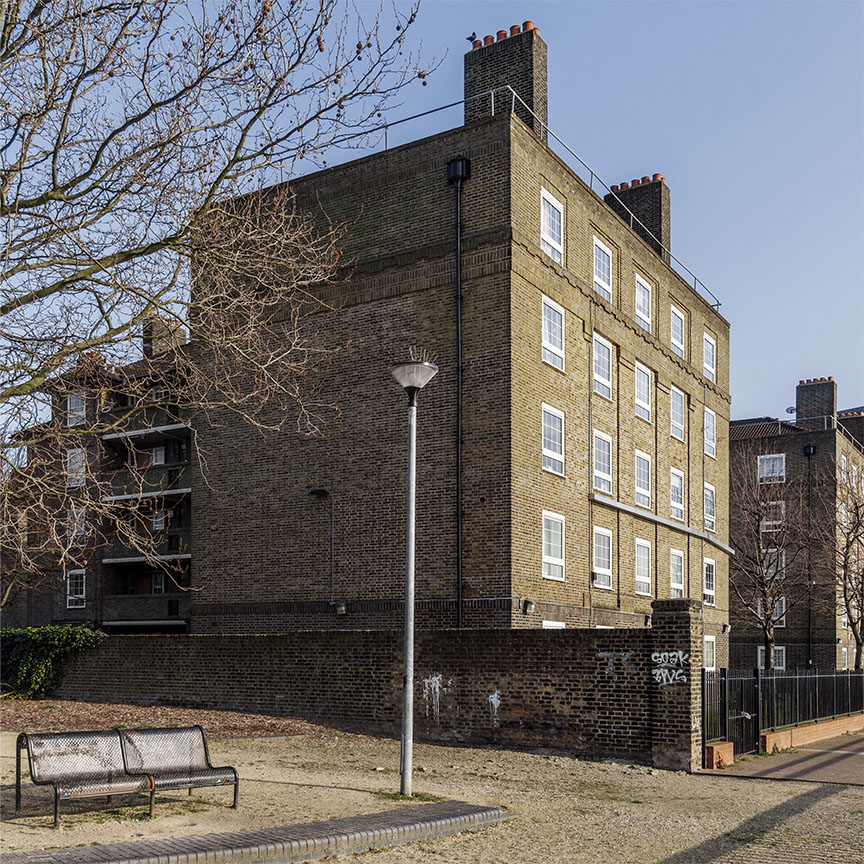 Kingsbridge Estate, 2015. © Mike Seaborne.
Originally known as the Millwall Estate, Kingsbridge was built by the London County Council in 1936-7, with an additional block being added in 1958-60. Despite their age, the blocks are structurally sound and are liked by many of the residents. However, their riverside location means that the value of the land they occupy is very high. The estate’s owner, One Housing Group, is currently consulting on ideas for the future, which may involve replacing the blocks with new housing for private sale.
Photos and text by Mike Seaborne, taken from Estates of Mind, photographs documenting 20th Century social housing by the Transition Group. Twitter feed: @TransitionLDN #TransitionProject. The pictures below are by Michael Mulcahy. Thanks to Mike and Michael.
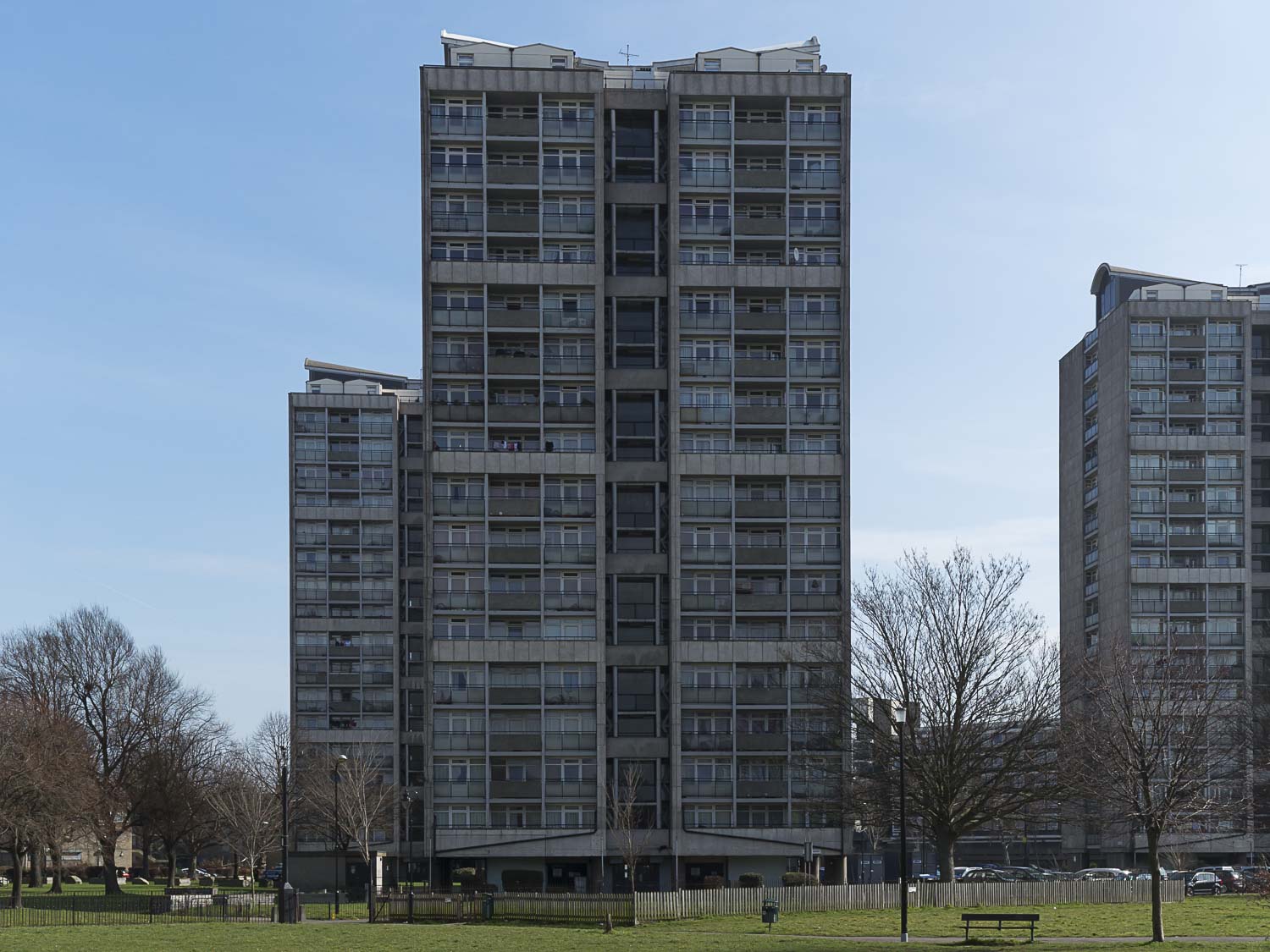 Brandon Estate, Kennington. © Michael Mulcahy.
 Lansbury Estate, Poplar. © Michael Mulcahy.
 Lansbury Estate, Isle of Dogs behind. © Michael Mulcahy.
See also: Balfron Remembered, Balfronism, Robin Hood Gardens, Two Men And A Dog, Pepys Estate.
The lost London of Marketa Luskacova.
Posted: January 5, 2015 Filed under: London Types, Markets, Pavements, Vanishings | Tags: Jesus Blood Never Failed Me Yet, London in the 1970s, Marketa Luskacova, old Spitalfields Market, The London Nobody Knows 1 Comment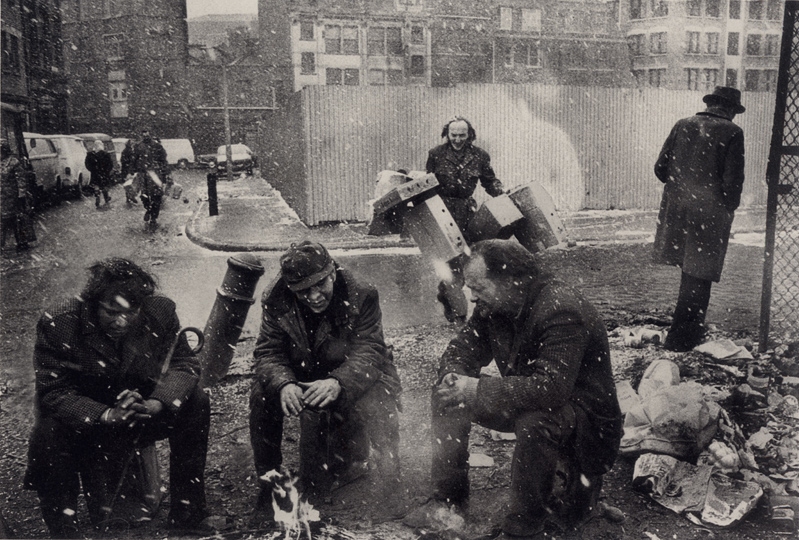 Homeless men, Spitalfields, 1975. © Marketa Luskacova.
Marketa Luskacova is a Czech photographer who has been largely resident in London since the early 1970s. She first made her name in the late 1960s, with a project documenting religious pilgrims in central Europe and a series of photographs of life in Sumiac, a remote village in Slovakia. These images show life rooted in a barely-changed medieval past, the realities of the 20th century banished by the sheer force of history. This subject matter might seem distinctly eastern European; but when she came to live in London in the early 1970s, she brought her unique sensibility (which I would characterize as a balance of grace, empathy and visual power) to the street markets of the east end.
 Spitalfields 1976. © Marketa Luskacova.
This milieu is recognisable to us from Don McCullin’s pictures of down and outs, the footage of drunks in The London Nobody Knows, and from other photographers and film-makers who have covered the same turf: the lost and dispossessed in the dark heart of the east end. But the crucial difference between these familiar images and Marketa’s photographs of the same territory is that she wasn’t there as a social anthropologist with a Leica; she was there to buy food. The traders shown in these photographs were the ones she saw every week; they were her friends. Her pictures might be a document of a time and place, but they are also a memoir of a life.
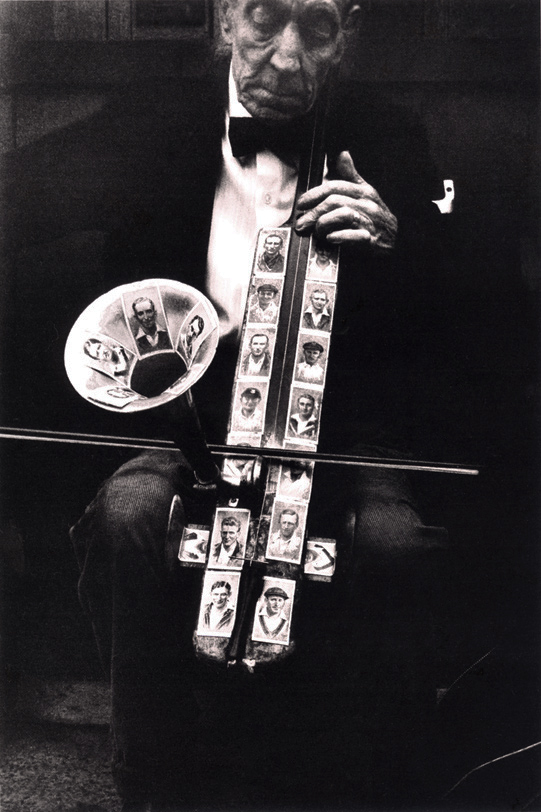 Street musician, 1979. © Marketa Luskacova.
Marketa’s images of London stand as some of the most poetic and heartbreaking photographs ever made of the city. As with all her work, these photographs exhibit an almost supernatural gift for faces. They are also an evocation of a London irretrievably lost to us; these are not scenes you will see in today’s east end. Marketa’s hawkers and street musicians are receding from us, as lost in time as the peasants of pre-industrial Europe. Marketa’s photographs of Whitechapel show a world as remote as the rituals of Sumiac.
 Lion cub and greyhound, Spitalfields, 1977. © Marketa Luskacova.
 Spitalfields, 1977. © Marketa Luskacova.
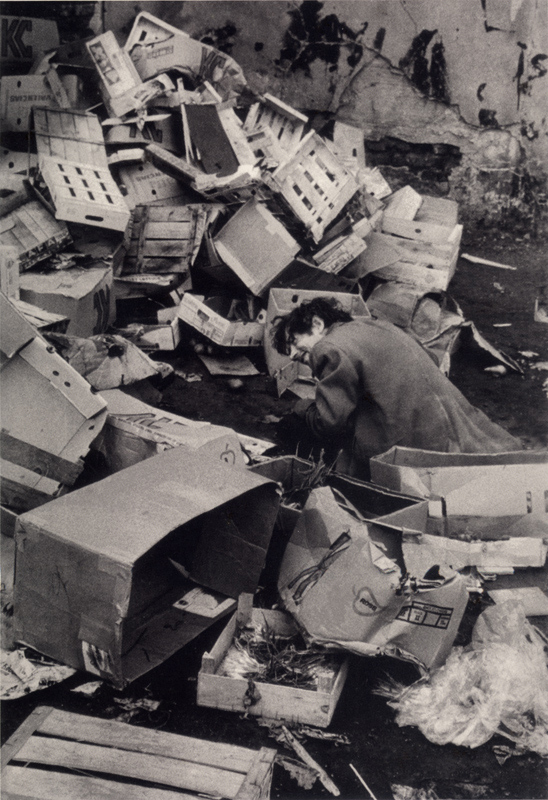 Spitalfields, 1975. © Marketa Luskacova.
Marketa Luskacova’s work has been in some ways neglected in comparison with other photographers of the same generation who have covered the same sorts of material. That said, her work has been widely exhibited and championed by the likes of Roy Strong, Bruce Bernard and John Berger – not to mention erstwhile Magnum colleagues such as Rene Burri, Josef Koudelka, Eve Arnold and Henri Cartier-Bresson, who selected one of her pictures for La Choix d’HCB, an exhibition of his favourite photographs. Her eye is unflinching, but her photographs brim over with feeling that never tips into sentimentality. The final picture here is, for me, one of those photographs which renders any attempt to analyse it utterly trite: I will say that it manages to be as funny as it is sad, and as mysterious as it is beautiful. True greatness. D.S.
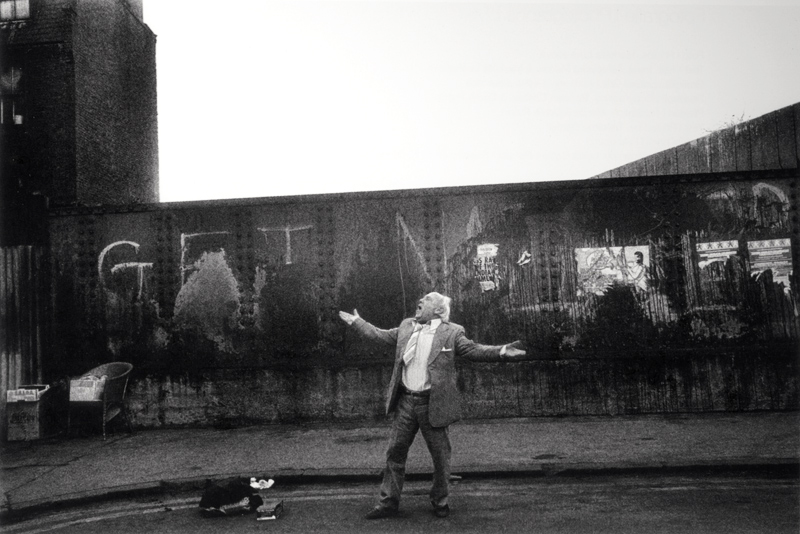 Street singer, Spitalfields, 1982. © Marketa Luskacova.
In search of Old Wych.
Posted: November 25, 2014 Filed under: Architectural, Ceremonial, Class, Health and welfare, Lettering, London Places, London Types, Pubs, Sartorial, Vanishings | Tags: 1890s Decadents, Bleak House, Dickens's London, Holywell St., King's College London, Old Curiosity Shop, Royal Courts of Justice, Sediment blog, The Seven Stars, Wych St. 3 Comments St. Mary le Strand. © David Secombe.
‘Bomber Harris looks like he’s pushing out a discreet fart’.
Thus observed CJ, of Sediment and Up North notoriety, as we stood in front of St. Clement Danes contemplating the statue of Arthur ‘Bomber’ Harris that stares balefully at Australia House. I could see CJ’s point; certainly, Air Chief Marshal Dowding is looking pointedly in the opposite direction, disavowing all association with his war-time colleague. On the other hand, Harris could just as well be evaluating Australia House’s chances of withstanding a thousand bomber raid.
CJ and I were drawn to this spot not by the relative dispositions of memorialized RAF grandees but to see if we could find traces of the ancient streets obliterated by early 20th century redevelopment. Australia House stands roughly on the site of Wych Street. Old Wych was described as ‘the prettiest street in London’ but the city’s civic class regarded it and its neighbours as inconvenient and unwholesome. An area full of theatres, bookshops, churches, inns of court and something like 600 historic houses, it was simultaneously a romantic backdrop to London’s intellectual life and an impediment to the aspirations of Boris’s Edwardian forbears. The planners won out, of course: cherished streets were cleared and replaced by monumental blocks of numbing pomposity. The names of the streets lost in this fatuous exercise in Haussmanism toll like a litany: Holywell St., Little Wild St., Stanhope St., Little Queen St., Clare St., Hollis St., Newcastle St., Houghton St. etc., … whilst the name given to the boulevard that eviscerated the old district could not be more deadly: Kingsway. Somehow, St. Mary le Strand escaped the surrounding destruction and now wears the air of a dowager trapped in uncouth company, sandwiched between the 1920s bombast of Bush House and the high Brutalism of King’s College’s 1970’s Strand Building.
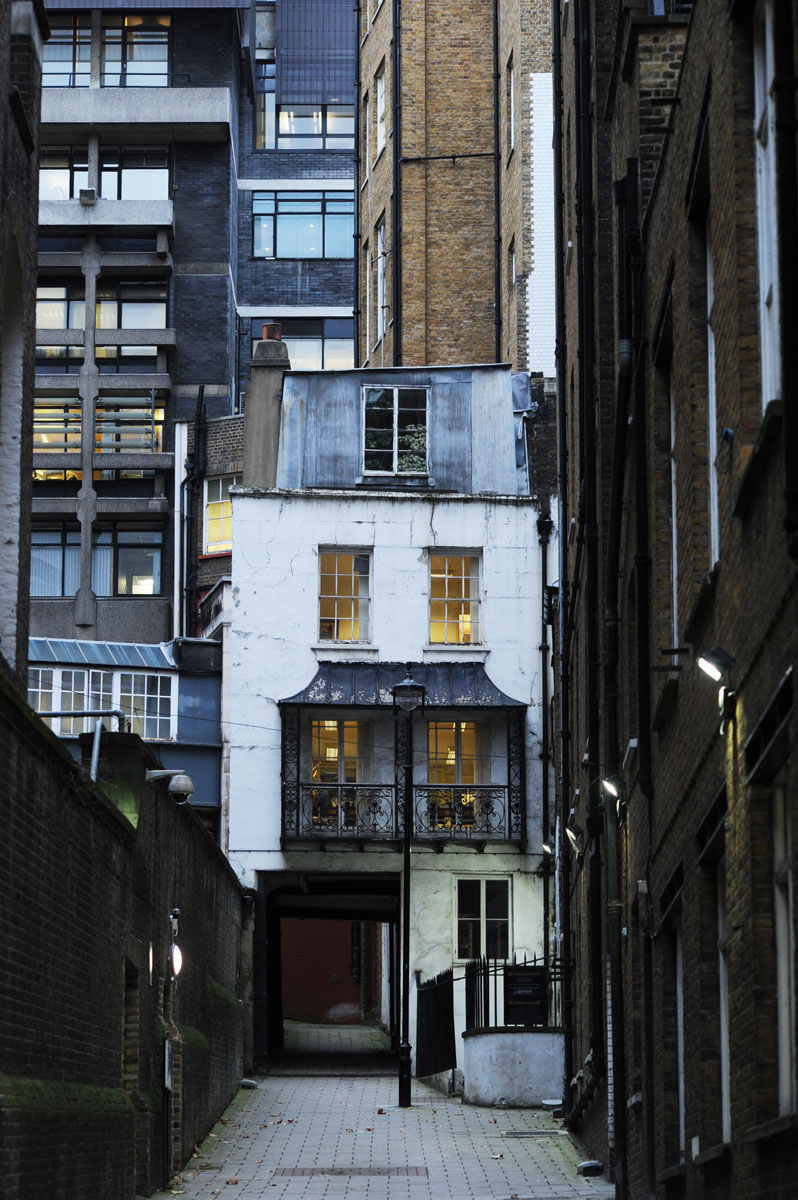 Strand Lane. © David Secombe 2014.
Just behind King’s Strand Building is Strand Lane, an alley running down to the Embankment which is now a pedestrianised access facility for the college. CJ and I accessed it via Surrey Steps, and found ourselves in the company of an American tourist searching for the ‘Roman bath’ which may be seen through a window in the courtyard of the galleried house in the above photo. Despite the assertions of Dickens and others, the bath isn’t Roman at all, and is thought to be a 16th or 17th century cistern that serviced one of the grand houses that stood here. We were more taken by the anomalous regency villa-ette that clings to the vast bulk of King’s like a remora on a whale. More office space for King’s – except for the attic, where well-tended plants indicate a domestic arrangement. An enviable address? I thought so and said as much to CJ, who merely looked at me pityingly (he lives in Mortlake).
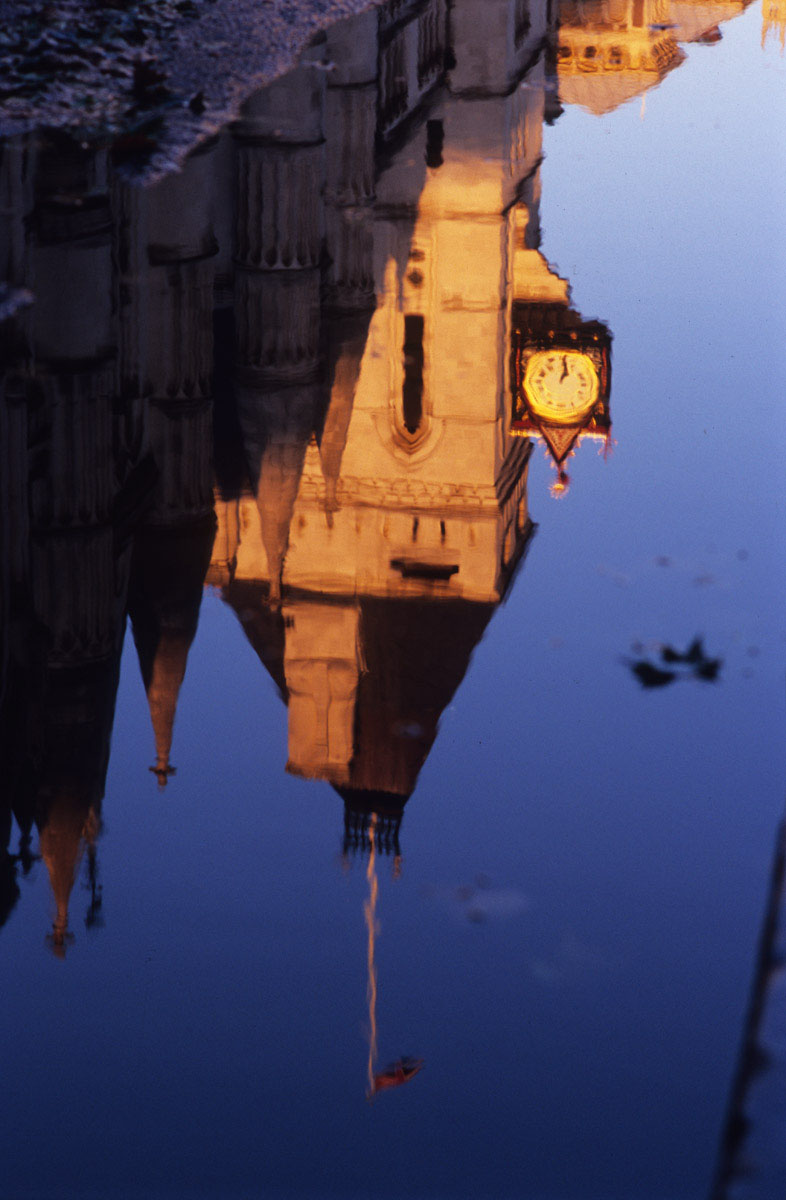 The Law Courts in a puddle. © David Secombe 2010.
We walked back to the Strand, past the disused Strand tube station (now owned by King’s and rented out for film shoots), and noted the wholesale demolition of 1960s blocks taking place between Surrey St. and Arundel St. In late Victorian times, this area was the heart of literary London. Holywell St. – where Bush House is now – was lined with bookshops and stalls, many of which specialised in naughty titles, and publishers’ offices. The Savoy, journal of the Decadent movement, was edited out of the Arundel St. premises of Leonard Smithers, publisher of Wilde, Beardsley, Beerbohm, Symons, Dowson, even Aleister Crowley. Arthur Symons edited The Savoy during the 1890s and lived nearby. In 1912 he wrote an elegy for the London that had been destroyed:
The old, habitable London exists no longer. Charles Lamb could not live in this mechanical city, out of which everything old and human has been driven by wheels and hammers and the fluids of noise and speed. When will his affectionate phrase, “the sweet security of streets,” ever be used again of London? No one will take a walk down Fleet Street any more, no one will shed tears of joy in the “motley Strand,” no one will be leisurable any more, or turn over old books at a stall, or talk with friends at the street corner. Noise and evil smells have filled the streets like tunnels in daylight; it is a pain to walk in the midst of all these hurrying and clattering machines; the multitude of humanity, that “bath” into which Baudelaire loved to plunge, is scarcely discernible, it is secondary to the machines; it is only in a machine that you can escape the machines.
 Entrance to New Square, Lincoln’s Inn, Carey St. north side. © David Secombe 2014.
We crossed the Strand in front of the Law Courts, past a pair of loitering petitioners, and sidled down Bell Yard towards Carey St. The Royal Courts of Justice was built in the 1870s, a product of the same mentality that later perpetrated Aldwych and Kingsway. A vast area of housing was cleared for George Edmund Street’s neo-Gothic scheme; in The Times, 12 September 1866, their correspondent profiled the district that was about to vanish:
The extensive and complicated networks of lanes, courts and alleys covering the area bounded east and west by Bell Yard and Clement’s Inn, north by Carey Street, and south by the Strand and Fleet Street, lately containing a population more numerous than many Parliamentary boroughs, is being fast deserted. Massive padlocks guard every door . . . The ground taken by the authorities entrusted with the arrangements for the new ‘Palace of Justice’ includes nearly thirty lanes and passages, the names of some of which will be familiar to all who have made acquaintance with the topography of London. Here still stand some old houses, the very peculiar, perhaps unique, character of whose construction is worthy of a visit. The main frontages to come down are, northwardly, nearly the whole of the south side of Carey Street, and, southwardly, the eastern and western extremities respectively, the north side of the Strand and Fleet Street, crossing Temple Bar.
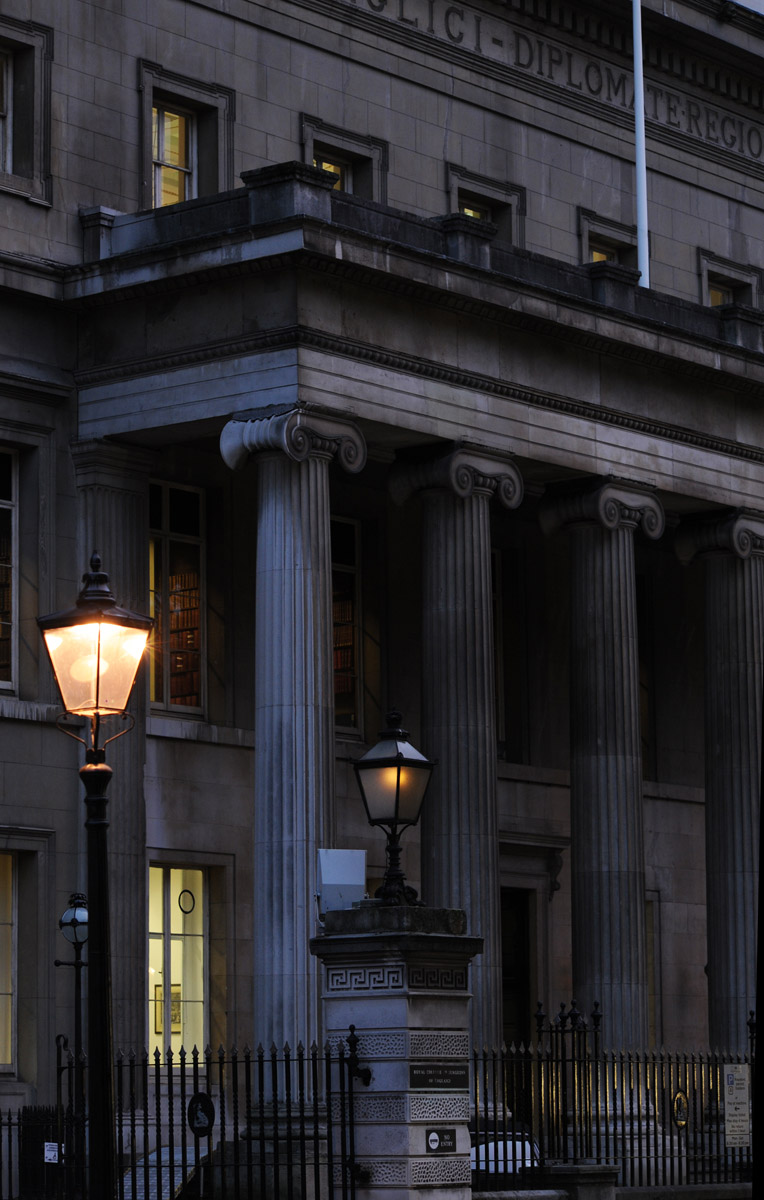 Royal College of Surgeons. © David Secombe 2014.
In the gathering twilight, CJ and I went for a quick jaunt around Lincoln’s Inn Fields. Outside the Royal College of Surgeons (Sir Charles Barry, 1833) we noted ostentatiously-parked production vans humming with the purposeful non-activity that is the exclusive preserve of film crews. We took in ‘The Old Curiosity Shop’ on Portsmouth St., a bizarre fragment of Tudor London which has acquired a spurious Dickensian connection and the aspect of a giant wendy house. But, as we are in Bleak House territory, everything has a spurious Dickensian connection. Dickens may have mined old London for his fiction but he also associated it with decay and, being a man of his time, was all for getting rid of it. The clearances and ugly ceremonialism of late Victorian and Edwardian London were driven by the logic of civil engineering yoked to the doctrine of economic growth. If traffic does not move fast London cannot grow; grand buildings are needed to reflect the city’s commercial/imperial status. … which, in the era of the Dome, the 2012 Olympics, Crossrail and Boris Johnson, shows that nothing has changed. The Times concluded its report on the 1866 clearances in bleakly familiar terms:
By the displacement of so many hundreds of poor families, the unhealthy courts about Drury Lane, Bedfordbury, the Seven Dials and other localities, already reeking and noisome with excess of numbers, have become more overcrowded than ever. The rents of the most miserable rooms have materially risen, and another entanglement is added to the difficult problem, ‘How and where are the poor to find suitable dwellings?’
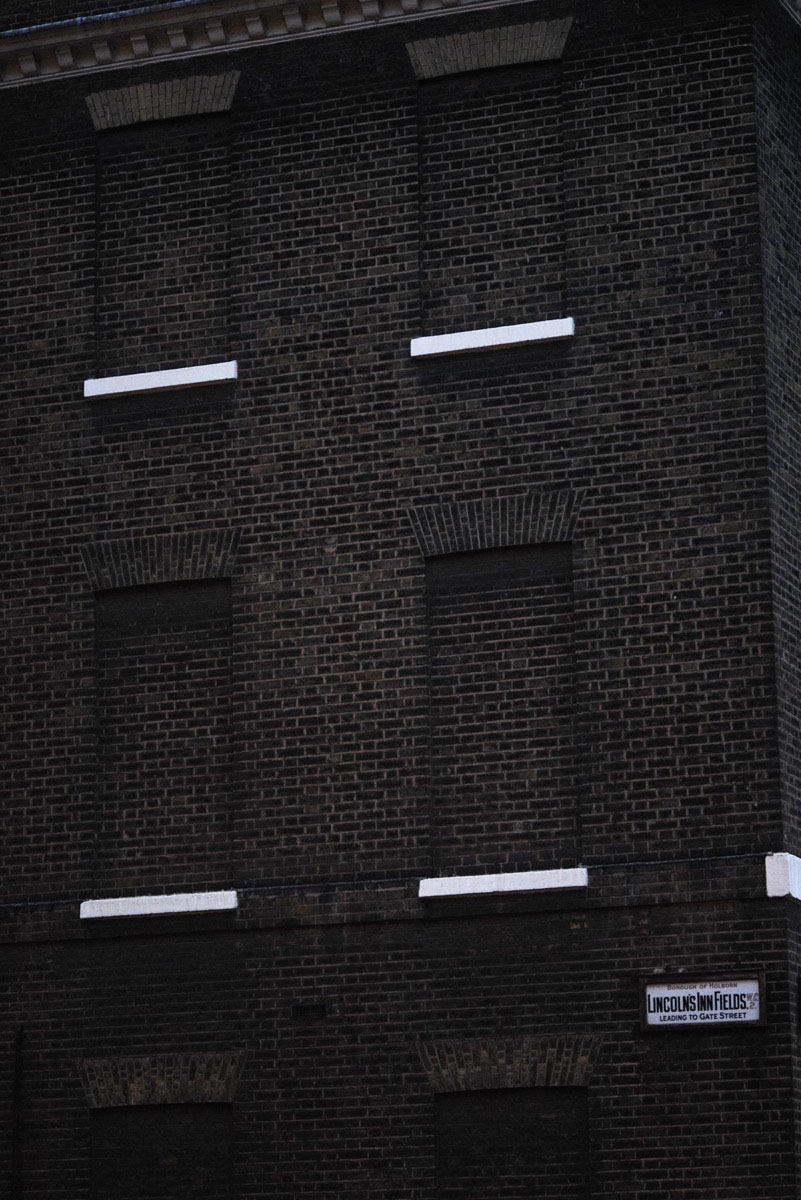 Corner of Remnant Street and Lincoln’s Inn Fields. © David Secombe 2014.
On the north-western corner of Lincoln’s Inn Fields is a pair of Georgian houses that have for many years lain empty, their facades sooted in a manner that has almost disappeared in London. Now the builders are in, and I doubt whether the old soot will remain on the brickwork for much longer. CJ quoted Iain Nairn waxing eloquently on the patina of soot on London’s buildings, but I can’t remember what he said now. In any case, I nodded sagely. We both nodded sagely. Then we stopped nodding sagely and decided to go for a drink. We had intended to spend some time exploring fragments of the pre-Edwardian landscape on the western side of Kingsway, but that will have to wait for another time. It was dark and we were old.
 ‘The Wig Box’, Seven Stars, Carey St.. © David Secombe 2014.
We headed back to Carey St. and The Seven Stars, installing ourselves at a tiny table in the pub’s ‘Wig Box’ extension. We drank beer which is a bit infra dig for CJ as he generally only drinks wine, albeit of a fairly desperate sort (if you have read Sediment you will know what I am talking about). I mentioned that I have a photo of The Wig Box that I took in 1986 when it was still an actual shop selling legal headgear. CJ looked a little fatigued, ignored my last factoid and commented that is a bit odd for a 50-year old man to be quite so indignant at the Edwardians who refashioned London. He’s probably right, although I would counter that modern Londoners are experiencing a coarsening of the environment which mirrors the arrogance of early-mid 20th Century planning. Arthur Symons’s anguish illustrates the gulf between those who find joy in the city and those who wish to control it. Everything is up for grabs and nothing can be taken for granted. Enjoy your pint while you can. Cheers.
… for The London Column.
See also: The Riverine Strand, A Short Walk Down the Old Kent Road, The Haunted House.
Hoffman at peace.
Posted: November 18, 2014 Filed under: Food, Health and welfare, London Music, London Types, Markets, Pavements, Performers, Vanishings | Tags: Brick Lane, David Hoffman, London street musicians, one man band, Tower Hamlets, Turkish baths Hackney Comments Off on Hoffman at peace.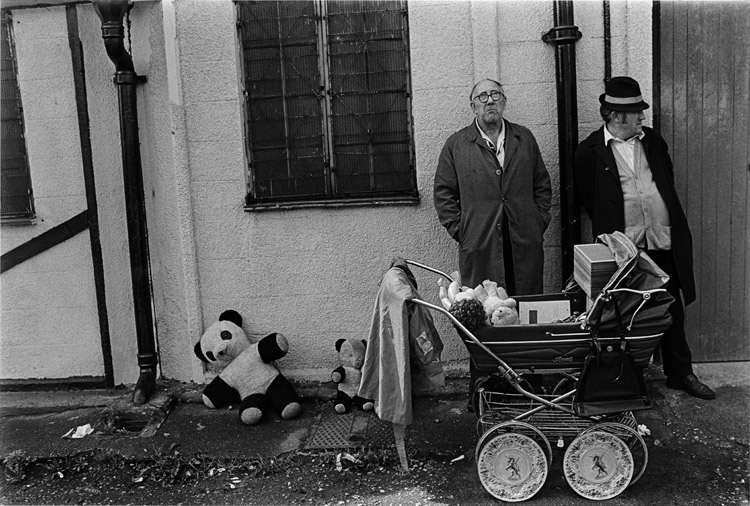 Street market, Cheshire Street, Tower Hamlets 1981.
As a counterweight to David Hoffman’s images of urban protest which we ran last week, here are a few of David’s pictures of a more peaceful London. Peaceful and largely vanished … these photographs have an elegiac quality to them, glimpses of a city that seems almost as remote as the one pictured by Thomson or A.L. Coburn. In any case, they require no further comment from me … D.S.
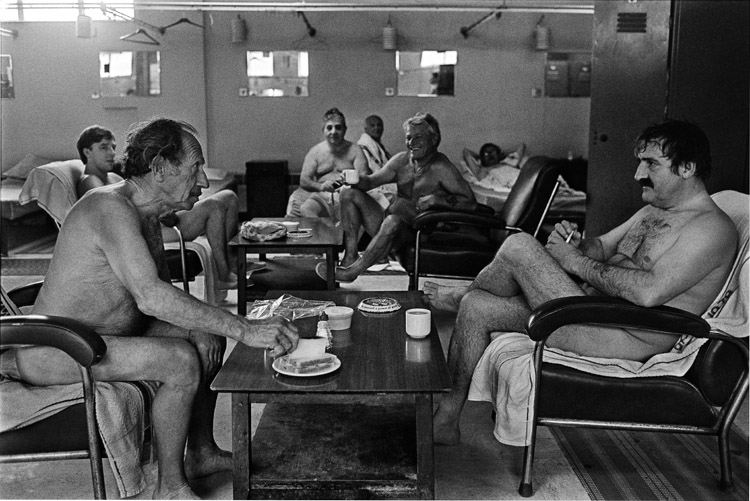 Turkish baths, Clapton, Hackney 1983. © David Hoffman.
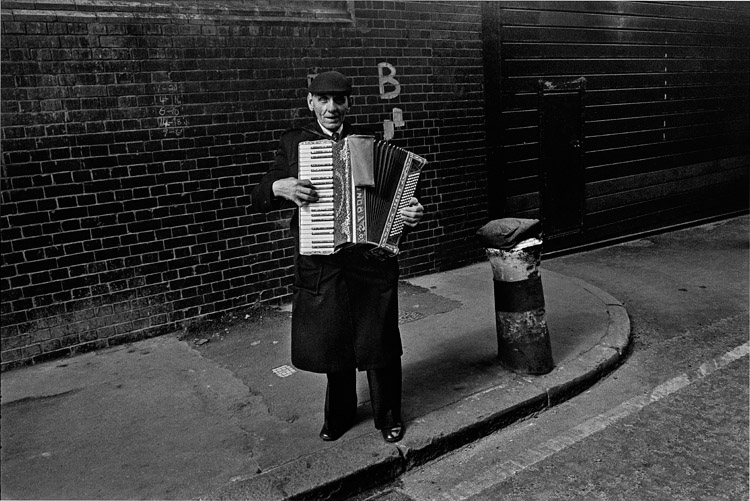 Street musician, Brick Lane, 1978. © David Hoffman.
 Silver Jubilee, Tower Hamlets, 1977. © David Hoffman.
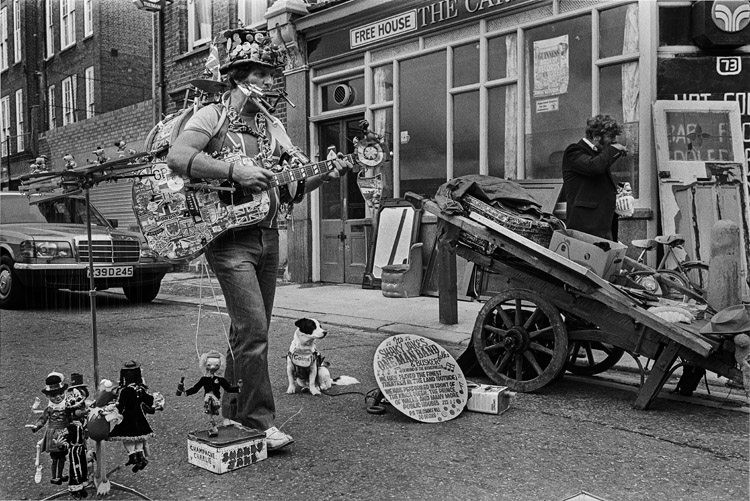 One Man Band, Brick Lane area, 1984. © David Hoffman.
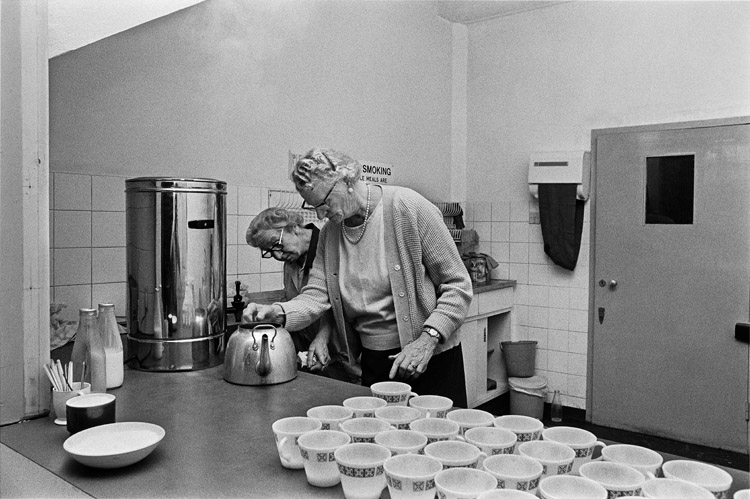 Tea time at an old peoples’ club in Tower Hamlets 1975. © David Hoffman.
As part of East London Photomonth, David’s images are on display until the end of this month at a variety of cafes forming the ‘Roman Road Cafe Crawl’. David’s show at Muxima cafe runs until 27th of November. More details here.


 The London Column
